The role of the Bible in Western theater dates back to the mystery plays of the Middle Ages. This form of theater primarily served pedagogical and religious purposes and were often directed by the Catholic Church. Traces of mystery plays can still be found in Europe, especially in Catholic and Orthodox countries where such plays are often staged around Easter and Christmas.
Secular theater emerged as a distinct art form in the early 16th century. Playwrights such as William Shakespeare, Christopher Marlowe and Ben Jonson rediscovered Aristotle’s poetics, which emphasised the portrayal of human life on stage. Biblical narratives were sidelined in favor of a focus on psychology.
In the 17th century, European playwrights once again turned toward the Bible for source material. The British poet and civil servant John Milton had long been interested in theology and Hebrew poetry, which is reflected in his later works. His most famous work, the epic poem Paradise Lost, tells the biblical story of the fall of man, and its sequel, Paradise Regained, is based on the Gospel of John. The first edition of Paradise Regained included the tragedy Samson Agonistes. The play dramatises the Book of Judges from the Old Testament, combining Hebrew epic with Greek tragedy.
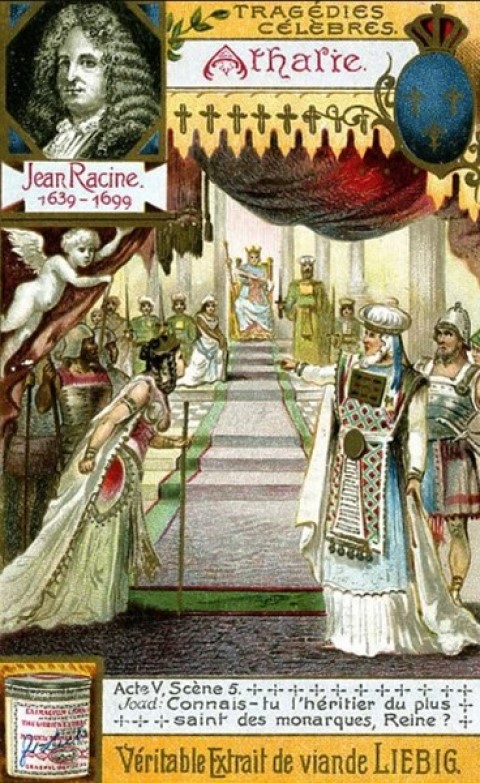
The French playwright Jean Racine was also inspired by the Bible. In 1689, he wrote Esther, a three-act tragedy based on the Book of Esther, and in 1691, he wrote Athalie, a five-act tragedy following Athaliah, the daughter of King Ahab and Queen Jezebel. Athalie is considered to be Racine’s masterpiece and one of the most significant works in French poetry.
As in other art forms, the Bible has remained an essential part of theater. Oscar Wilde’s Salome, Maurice Maeterlinck’s Mary Magdalene, and Jean Giraudoux’s Judith have all shown that biblical stories still have artistic relevance.
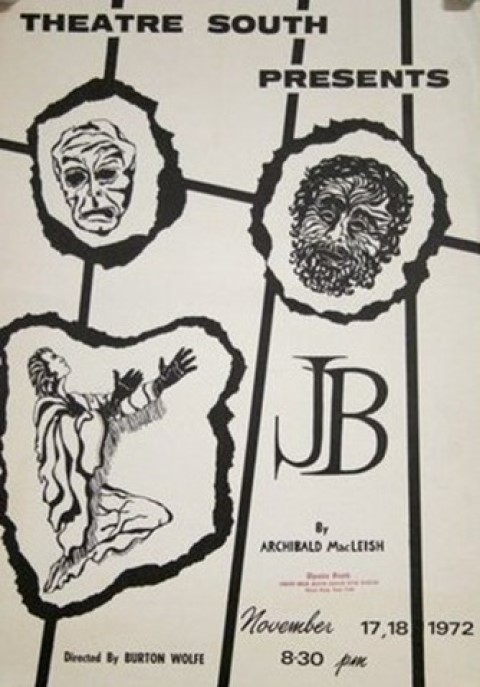
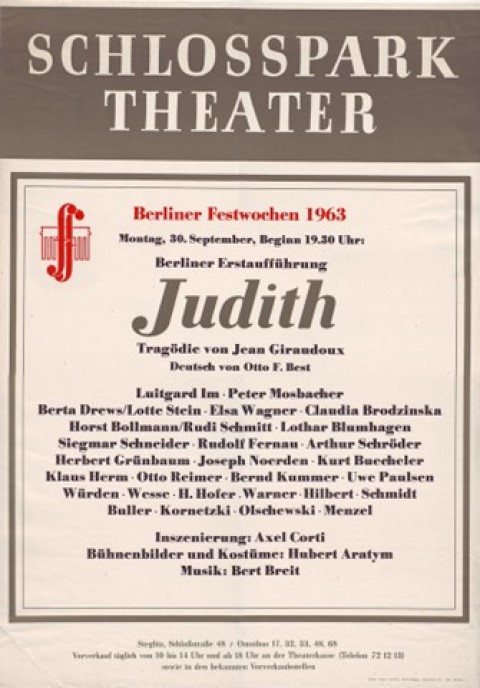
Several of these plays have been performed in theatres worldwide, including at the Théâtre du Châtelet in Paris, Schlosspark Theater in Berlin and Theatre South in Orlando.
Here is a selection of dramas with biblical themes:
Samson Agonistes (1671) – John Milton (UK)
Esther (1689) – Jean Racine (France)
Athalie (1691) – Jean Racine (France)
Saul (1782) – Vittorio Alfieri (Italy)
Judith (1841) – Friedrich Hebbel (Austria)
Salome (1891) – Oscar Wilde (UK)
Mary Magdalene (1910) – Maurice Maeterlinck (Belgium) King David and His Wives (1923) – David Pinski (Russia/Israel)
Judith (1931) – Jean Giraudoux (France)
J.B. (1958) – Archibald MacLeish (USA)
Judith (1958) – Kjeld Abell (Denmark)