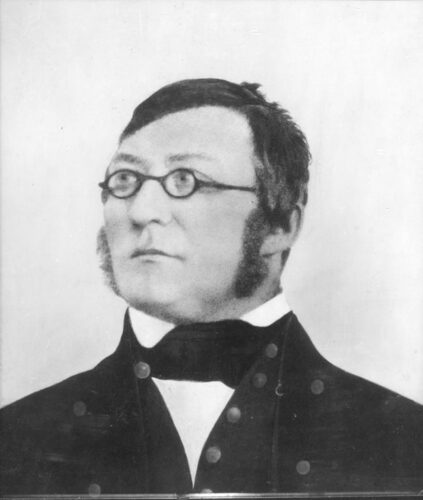
The Norwegian poet Henrik Wergeland was strongly influenced by the Bible throughout his life. This is evident through both his artistic and political work.
It was a given that the Bible would become important to Henrik Wergeland. His father, the priest and Eidsvoll delegate Nicolai Wergeland, used the Bible as a guiding principle in raising Henrik and his siblings. Henrik later followed in his father’s footsteps and became ordained as a priest in 1829. However, due to disagreements with the leading theologians of his time and his anti-dogmatic views, Henrik Weregeland’s priesthood remained unfulfilled.
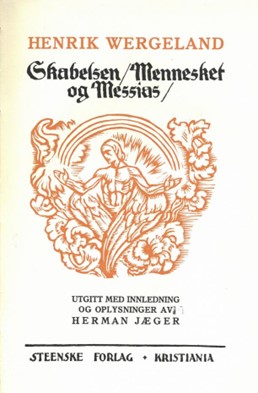
The influence of the Bible on Wergeland is most evident in his cosmological poem Skabelsen, Mennesket og Messias (Creation, Mankind and Messiah), which was published in 1830. This poem is often referred to as a biblical poem, it tells the story of creation, the garden of Eden, and Jesus’ death and resurrection. The poem explores several biblical themes, including human nature, salvation, and Jesus’ role in the Christian faith. Wergeland considered Skabelsen (Creation) as his principal work, and today it is regarded as the cornerstone of his authorship.