Classical music, as we characterise it today, has its roots in the 14th century Ars Nova period. This era marked a departure from traditional liturgical church music used in Catholic masses. The music received strong resistance from the clergy because of its rhythmic idiom and secular lyrics, and was later banned by Pope John XXII. Despite the Church’s cold shoulder, these new composers had a significant influence among the nobility. Ars Nova music continued through the late Middle Ages thanks to scholarships, commissioned work, and concerts, often held in palaces.
The role of the Bible in classical music came to the forefront during the Renaissance. Unlike the Gothic culture of the Middle Ages, the Renaissance was inspired by ancient Rome and Greece, leading to a greater focus on humanism in culture. This influenced not only art, but also the Church. Popes such as Julius II, Nicholas V, and Sixtus IV became eager patrons of contemporary artists, including composers, which led to the establishment of the Roman School.
Among the representatives of the Roman School, we find Gregorio Allergri. His most notable work is the famous composition Miserere. The piece is based on Psalm 51, and it’s considered a pinnacle of European music history. It became a significant source of inspiration for future composers, such as Bach, Mozart, and Mendelssohn.
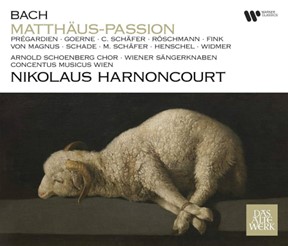
The Bible continued to be a significant source of inspiration for European composers. The most prominent Baroque composer, Johann Sebastian Bach, had a close relationship with the Bible, which is evident in several of his compositions. The most famous of these is perhaps the St. Matthew Passion, an oratorio based on Martin Luther’s translation of the Gospel of Matthew. Other works by Bach that drew inspiration from the Bible include St. John Passion, the Ascension Oratorio, and the Easter Oratorio.
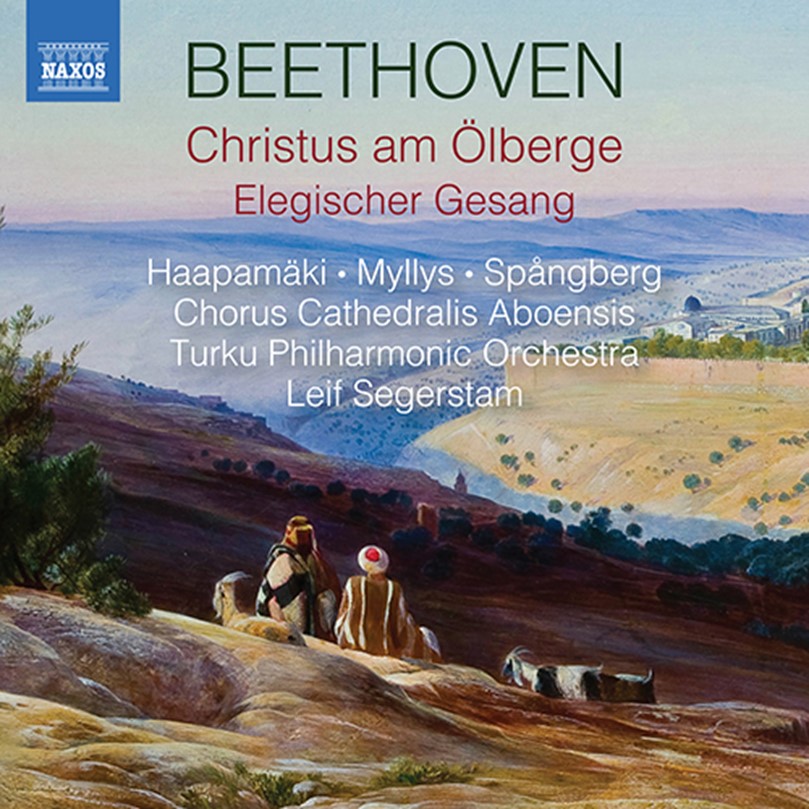
Biblical motifs are also found in the works of the 18th-century Viennese classical composers. Haydn’s The Seven Last Words of Christ, Beethoven’s Christ on the Mount of Olives, and Franz Schubert’s Lazarus all demonstrate that the Bible had a central place in Vienna’s musical environment.
The Bible played a somewhat lesser role in the romantic music of the 19th century. This was the period of emotion, where attention was shifted away from the civilised and urban in favour of the natural and mystical. This mindset is best expressed by composers such as Richard Wagner, Hector Berlioz, and Edvard Grieg, whose music drew its inspiration from myths and fairytales. Nevertheless, some composers still chose to draw inspiration from the Bible. Felix Mendelssohn’s oratorio St. Paul is based on the Acts of the Apostles, following Paul’s journey from Jerusalem to Damascus. Parts of the work also draws inspiration from Psalm 103.
The modernists of the 20th century demonstrated that the Bible remained a relevant theme in music. Arnold Schönberg’s Moses and Aaron was the first opera to use the twelve-tone technique. The piece is a retelling of the second book of Moses, Exodus. Other well-known modern pieces based on biblical narratives include Benjamin Britten’s The Prodigal Son, Igor Stravinsky’s Babel, and John Tavener’s Cain and Abel.
Here’s a selection of famous pieces of music based on the Bible:
Gott der Herr der mächtige redet (God, the Lord, the almighty, speaks)(1680s) – Georg von Bertouch (Denmark/Norway)
St Matthew Passion (1727) – Johann Sebastian Bach (Germany)
Deborah (1773) – Georg Friedrich Händel (Germany/UK)
The Seven Last Words of Christ (1787) – Joseph Haydn (Austria)
Christ on the Mount of Olives (1802) – Ludwig van Beethoven (Austria)
The Death of Adam (1809) – Jean-François Le Sueur (France)
Jephthas Vow (1812) – Giacomo Meyerbeer (Germany)
Moses in Egypt (1818) – Gioacchino Rossini (Italy)
Moses Fantasy (1818) – Niccolo Paganini (Italy)
Lazarus (1820) – Franz Schubert (Austria)
St Paul (1836) – Felix Mendelssohn (Germany)
Nabucco (1844) – Giuseppe Verdi (Italy)
Psalm 150 (1847) – Charles-Valentin Alkan (France)
Christus (1862-1866) – Franz Liszt (Hungary)
Samson and Delilah (1877) – Camille Saint-Saëns (France)
Psalm 150 (1883) – César Franck (France)
Biblical Songs (1893) – Antonín Dvořák (Czech Republic)
Psalms 13 & 23 (1900) – Alexander von Zemlinsky (Austria)
Saul and David (1901) – Carl Nielsen (Denmark)
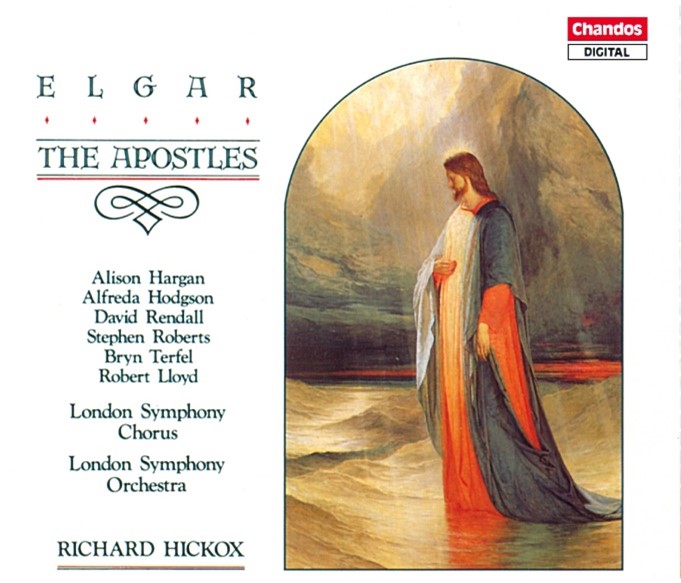
The Apostles (1903) – Edward Elgar (UK)
Salome (1905) – Richard Strauss (Germany)
Belshazzar’s Feast (1906) – Jean Sibelius (Finland)
Psalm 121 (1911) – Fartein Valen (Norway)
Job (1911) – Ralph Vaughan Williams (UK)
Moses and Aaron (1926-1932) – Arnold Schönberg (Austria)
The Revelation of St John (1940) – Hilding Rosenberg (Sweden)
Jeremiah (1942) – Leonard Bernstein (USA)
Babel (1944) – Igor Stravinsky (Russia/France)
Ruth (1955-1956) – Lennox Berkeley (UK)
Cain and Abel (1965) – John Tavener (UK)
The Prodigal Son (1965) – Benjamin Britten (UK)
Job (1973) – Egil Hovland (Norway)
Apocalypsis Joannis (1998) – Knut Nystedt (Norway)