
Who Was Paul? A Brief Overview
- Paul was a Jewish Pharisee from Tarsus, in present-day Turkey, who
persecuted the earliest Christians. - He was converted on the road to Damascus after a vision of the risen Jesus.
- As an apostle, he undertook three missionary journeys and founded
churches throughout the Mediterranean region. - Paul has traditionally been credited with 14 of the 27 books of the New Testament.
Who Was Paul?
Paul—originally known as Saul—was one of the most influential figures in the history of Christianity. He was born in Tarsus, a city in the Roman
province of Cilicia, in present-day Turkey. As a Roman citizen (Acts 22:28),
he enjoyed privileges that later proved important during his missionary
journeys and when he was brought to trial.
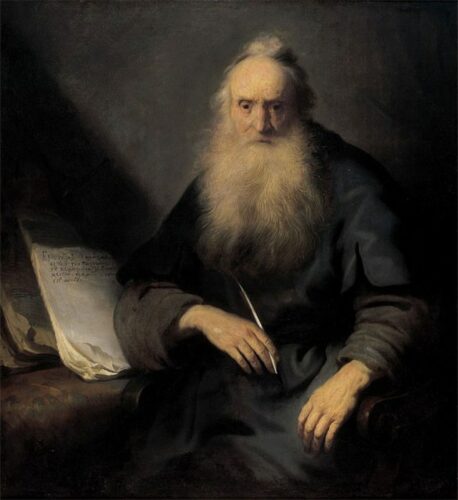
Paul was an Israelite of the tribe of Benjamin (Philippians 3:5). He was
trained as a Pharisee and acquired a thorough knowledge of the Hebrew
Scriptures and the Law of Moses. This background helps explain why, as a
young man, he actively persecuted Jesus’ followers, whom he believed
threatened the Jewish faith.
Paul’s life changed on the road to Damascus, where he experienced a
vision of the risen Jesus. Following this event, he was baptised and
devoted the rest of his life to preaching the gospel. Through his three
missionary journeys, he spread Christianity among both Jews and non-Jews
(Gentiles), establishing churches in many cities around the Mediterranean.
Paul is particularly known for his letters, which address themes such as
faith, salvation, grace, love and Christian living. These letters form a
substantial part of the New Testament and have profoundly influenced
Christian belief throughout history.
Saul of Tarsus—Who Was He Before He Was Known as Paul?
Tarsus’s location made it a natural meeting place for Jewish, Greek and
Roman cultures. This cultural mix shaped Paul’s upbringing and later
ministry.
The Greek historian Strabo wrote that “the people of Tarsus have
surpassed Athens, Alexandria and every other place one could name
where there have been schools and lectures in philosophy.” (Strabo,
Geography, 14.5.13; translated from Norwegian).
Although Paul grew up in Tarsus, he received his religious education in
Jerusalem under the renowned teacher Gamaliel, a respected member of
the Sanhedrin, the highest Jewish council.
Paul describes himself as a Pharisee. The Pharisees were an influential
religious movement within Judaism that placed great emphasis on
observing the Law of Moses and oral traditions.
Read more about the Law of Moses and its foundations in our article on the
Ten Commandments.
Paul’s Vision—What Happened on the Road to Damascus?
Before his conversion, Saul fiercely opposed the early Christian church. He
supported the stoning of Stephen, a disciple regarded as the first Christian
martyr, and brutally persecuted Christ’s followers. His actions were driven
by a sincere but misguided zeal for Jewish traditions and a belief that
Christians threatened his faith.
Saul went so far as to seek out Jesus’ followers in Damascus, carrying
authority from the high priest to bring them back to Jerusalem as
prisoners. It was on this journey that his life took a dramatic turn.
According to Acts, Saul was suddenly surrounded by a bright light from
heaven. He fell to the ground and heard a voice saying, “Saul, Saul, why
do you persecute me?” When he asked who was speaking, the voice
replied, “I am Jesus, whom you are persecuting.”
The encounter with the risen Christ left Saul temporarily blind, and he had
to be led into Damascus. For three days he was unable to see while he
fasted and prayed. Jesus then sent the disciple Ananias to him.
Ananias laid his hands on Saul; his sight returned, and he was baptised.
Saul repented of his former sins, and Jesus called him to be his instrument,
preaching the gospel to both Jews and other nations (Acts 9:15; 13:46).
Many people believe that Jesus gave Saul a new name after his
conversion, but the Bible does not say that this happened. Saul was his
Hebrew name, while Paul was his Roman name. Saulus is a Latin form of
the Jewish name Saul. As a Jew with Roman citizenship, he probably had
both names from childhood.
In Acts chapter 13, Luke begins to refer to him as Paul as the mission to
the Gentiles gets under way. The change in usage therefore reflects the
audience for his ministry, rather than a new name given to him at his
conversion.
The experience on the road to Damascus marked the beginning of an
entirely new life. The man who had once persecuted Christians now
became Paul the apostle.
Paul as an Apostle and Missionary
After his conversion, Paul immediately began preaching in the synagogues
that Jesus was the Messiah. At first, Christians were afraid of him because
he had previously persecuted the church. In time, they came to trust him.
Paul’s wholehearted commitment to his ministry repeatedly brought him
opposition, imprisonment, physical abuse and other life-threatening
situations. Nevertheless, he continued to preach the gospel, helping many
people discover the Bible’s message and the Christian faith.
During his missionary travels, Paul remained unmarried and worked as a
tentmaker to support himself. He wanted to preach without placing a
financial burden on the churches he visited.
On his three missionary journeys, he travelled thousands of kilometres on
foot and by ship, spreading the gospel and establishing Christian churches
across much of the Roman Empire.
First Missionary Journey (Acts 13:1–14:28)
Paul undertook his first missionary journey (c. AD 46–48) with Barnabas
and John Mark. They set out from Antioch in Syria and travelled to Cyprus
and several cities in Asia Minor, including Pisidian Antioch, Iconium, Lystra
and Derbe. Paul preached both in synagogues and to Gentiles, and several
new churches were founded.
Second Missionary Journey (Acts 15:36–18:22)
Paul set out on his second missionary journey (c. AD 49–52) with Silas;
Timothy and Luke later joined them. Among the places Paul visited were
Philippi, Thessalonica, Berea, Athens and Corinth. During this journey, the
gospel was preached in Europe for the first time, and several of the most
important churches mentioned in the New Testament were established.
Third Missionary Journey (Acts 18:23–21:19)
The purpose of the third missionary journey (c. AD 52–57) was to
strengthen the churches Paul had already founded. He spent a particularly
long time in Ephesus, where many people came to faith. From there, he
revisited churches in Macedonia and Greece before heading back towards
Jerusalem.
After his missionary journeys, Paul was arrested in Jerusalem. As a Roman
citizen, he appealed his case to the emperor and was sent to Rome.
Paul’s Letters—What Did He Write?
Traditionally, Paul is credited with 14 of the New Testament’s 27 books—
more than any other author. These letters were written to churches and
individuals to teach, encourage, correct and strengthen believers.
The 14 Letters Attributed to Paul
- Romans—explains the gospel, salvation through faith and the
relationship between God’s mercy and the law. - 1 Corinthians—addresses challenges within the church, including
divisions, the Lord’s Supper, spiritual gifts and the resurrection. - 2 Corinthians—describes Paul’s ministry, sufferings and
relationship with the church in Corinth. - Galatians—emphasises that people are justified by faith in Christ
rather than by observing the works required by the Law of Moses. - Ephesians—discusses the church as the body of Christ and how
Christians should live. - Philippians—an encouraging letter about joy, humility and
faithfulness, written from imprisonment. - Colossians—emphasises Christ’s central role and warns against
false teaching. - 1 Thessalonians—encourages believers and teaches about Jesus’
return. - 2 Thessalonians—expands on teaching about the end times and
urges Christians to stand firm in their faith. - 1 Timothy—offers advice on church leadership, doctrine and
Christian living. - 2 Timothy—Paul’s last surviving letter, offering personal
encouragement to Timothy to hold firmly to the gospel. - Titus—provides guidance on church leadership and good works.
- Philemon—a personal letter about forgiveness and reconciliation
between Philemon and the enslaved man Onesimus. - Hebrews—written to Jewish Christians, responding to accusations
against Christians and offering encouragement, exhortations and
warnings.
Was Paul an Apostle—and Was He a Disciple?
Yes, Paul was an apostle, but he was not one of Jesus’ twelve apostles. He
became a disciple (a “learner”) when he was converted.
The twelve disciples followed Jesus during his public ministry, before his
death and resurrection. Paul, by contrast, first encountered the risen Jesus
on the road to Damascus.
Nevertheless, Paul calls himself an apostle (an “envoy”) because he
believed he had been called directly by Jesus Christ. At the very beginning
of Galatians, he writes: “Paul, an apostle, sent neither by human beings
nor through any human being, but by Jesus Christ and God the Father”
(Galatians 1:1). Paul also calls himself an “apostle to the Gentiles”
(Romans 11:13), because he had a particular calling to preach the gospel
among the nations outside Israel.
Read more about Jesus’ twelve disciples here.
How Did Paul Die?
After several years as a missionary, Paul was imprisoned twice in Rome.
According to tradition, he was imprisoned again during Emperor Nero’s
persecution of Christians before eventually being executed. The Bible does
not tell us how Paul died.
Come and Visit Us
Would you like to learn more about the Bible and the people behind it?
Visit the Nordic Bible and Book Museum in Oslo and discover rare Bible editions and historical manuscripts that tell the story of Paul and the early Christian community. Here, you can learn more about the people who shaped the Bible and its history.
Find opening hours and practical information here
Frequently Asked Questions About Paul
Who Was Paul?
Paul became an apostle, missionary and teacher who spread the gospel
throughout the Roman Empire and wrote more letters in the New
Testament than any other author.
What Was Paul Originally Called?
He was called Saul, his Hebrew name. Paul was his Roman name.
Where Was Paul Born?
Paul was born in Tarsus in Cilicia, in present-day Turkey.
Was Paul an Apostle?
Yes. Paul is regarded as an apostle because he was called directly by the
risen Jesus, although he was not one of the Twelve.
Was Paul a Disciple?
Yes. When Paul was converted, he became both a disciple (a “learner”)
and an apostle (a “messenger”).
What Is the Difference Between Saul and Paul?
Saul was his Hebrew name, while Paul was his Roman name.
What Did Paul Do?
He preached the gospel, founded churches, undertook three missionary
journeys and wrote substantial portions of the New Testament.
What Are Paul’s Letters?
They are 14 “books” of the New Testament traditionally attributed to the
apostle Paul. They address topics including faith, salvation, church life and
Christian living.
What Was a Pharisee?
A Pharisee was a member of a Jewish religious movement that placed
great emphasis on the Law of Moses and oral traditions. Paul was trained
as a Pharisee before becoming a Christian